Easy
Bubbly, Fruity & Dry
1 Minute
Champagne Glass
Ingredients
Kir Royal (also spelled Kir Royale) is a classic French champagne cocktail – elegant, simple and one of the most celebrated aperitifs in the world.
Made with just two ingredients – champagne and a splash of crème de cassis (black currant liqueur) – the Kir Royal is a reminder that elegance doesn’t need to be complicated.
The crème de cassis naturally sinks to the bottom of the flute, and as the champagne is poured on top, the bubbles draw the two together, creating a beautiful, even purple hue throughout the glass. No stirring required.
Born in the Burgundy region of France, the Kir Royal has been a staple of French drinking culture for decades, and one that has inspired countless variations.
How To Make A KIR ROYAL Cocktail
Bar tools you’ll need

Jigger
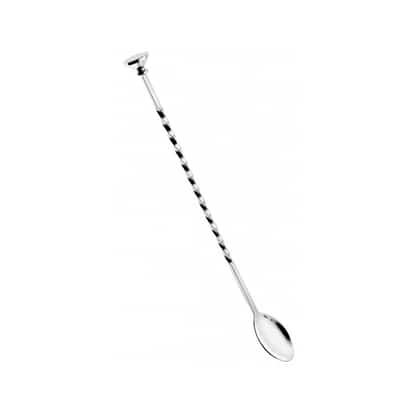
Bar Spoon
How to Mix
-
Chill a champagne flute.
-
Use a jigger to measure and pour Black Currant Liqueur into the base of the flute.
-
Slowly pour the Champagne into the glass over the back of a spoon to preserve the bubbles.

All about the Kir Royal
A Kir Royal is a classic French champagne cocktail made with crème de cassis (black currant liqueur) and champagne, served in a champagne flute.
Also known as a Kir Royal, it is one of the most widely recognized French cocktails in the world – equally at home as a pre-dinner apéritif, a wedding toast or a New Year’s Eve celebration.
Fruity and semi-sweet. The black currant liqueur brings a deep, berry-forward richness that’s softened by the crisp, dry effervescence of the champagne. The two balance each other naturally – the sweetness of the crème de cassis keeping the dryness of the champagne in check, while the bubbles lift the berry flavors and give the drink its characteristic effervescence.
The Kir Royal takes its name from a former mayor of Dijon in the Burgundy region of France, who popularized the original Kir – white wine and black currant liqueur – in the 1950s. The Royal variation, which substitutes champagne for white wine, emerged as a more celebratory version of the original.
Burgundy is the historic home of crème de cassis (black currant liqueur) and the combination of local liqueur with French wine has been a regional staple for generations. The Kir Royal took that tradition and gave it a sense of occasion, becoming one of the most ordered apéritifs in France and beyond.
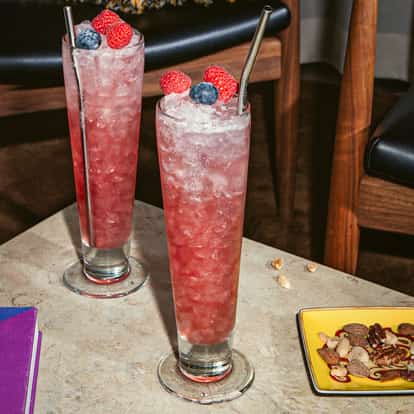
Its influence extends well beyond France. The Russian Spring Punch, created in 1980s London, draws directly from the Kir Royal’s blackcurrant and champagne foundation, adding vodka, lemon juice and simple syrup to create something sharper and more complex. It remains one of the most celebrated examples of the Kir Royal’s lasting impact on modern cocktail culture.
The Kir Royal is one of the simplest cocktails to make but there are few small details that will make a big difference to your drink:
- Always add the crème de cassis first
Pour the black currant liqueur into the flute before the champagne – never the other way around. As the heavier of the two ingredients, it naturally sinks to the bottom, allowing the champagne to draw it upward as it’s poured, creating that even pink-purple hue throughout the glass. - Use a dry champagne
A brut champagne works best – its natural dryness balances the sweetness of the black currant liqueur. A sweeter champagne will tip the drink into “too sweet” territory. - Pour in the champagne slowly
Pour over the back of a spoon to preserve the carbonation and create the drink’s signature gradient. The black currant liqueur will naturally rise through the champagne as it’s poured – don’t stir. - Chill your flute
Place the champagne flute in the freezer for at least 15 minutes before serving. A cold glass preserves the bubbles and keeps the drink at its best.
- Kir
The original and the drink the Kir Royal was born from. Replace the champagne with a dry white wine, traditionally an Aligoté from Burgundy, for a less celebratory version. - Kir Pétillant
Swap the champagne for sparkling wine or prosecco for a more accessible, everyday version of the Kir Royale. The result is slightly fruitier and less dry than the champagne original. - Russian Spring Punch
Perhaps the most celebrated drink inspired by the Kir Royale, the Russian Spring Punch builds on the blackcurrant and champagne foundation, adding vodka, lemon juice and simple syrup for a sharper, more complex character. Discover the recipe for a Russian Spring Punch. - Faux Kir Royale
A non-alcoholic version of a Kir Royal that captures the spirit of the original without the alcohol. Here’s how to make a Faux Kir Royale.
With its distinct color and celebratory bubbles, the Kir Royal is a drink that needs very little.
- Glassware
Always serve in a champagne flute – it preserves the bubbles, shows off the color and is the traditional vessel for this drink. - Garnish
The Kir Royale is traditionally served without a garnish as the drink’s deep, jewel-like color is the visual. If you want to add something, a single fresh blackcurrant or a small twist of lemon zest on the rim is all it needs.
Kir Royal FAQ
The primary difference is the wine. Both drinks are classic French apéritifs made with crème de cassis (black currant liqueur) but a Kir uses still dry white wine, traditionally an Aligoté from Burgundy, while a Kir Royale uses champagne.
The champagne gives the Kir Royal a more celebratory, effervescent character that has made it the more widely known of the two.
Yes, prosecco works well as a substitute and gives the drink a slightly fruitier, less dry finish. This version is sometimes known as a Kir Pétillant. For the most authentic Kir Royal, use a brut champagne – its natural dryness balances the sweetness of the crème de cassis.
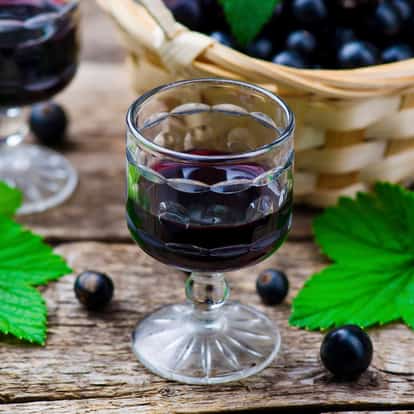
Crème de cassis is a sweet black currant liqueur traditionally made in the Burgundy region of France – the same region that gave us both the Kir and the Kir Royale. It is the defining ingredient of both drinks, giving them their characteristic deep berry flavor and jewel-like color. When buying crème de cassis, look for a Burgundy-produced variety for the most authentic flavor.
IF YOU ENJOY A KIR ROYAL, YOU MIGHT ALSO LIKE THESE COCKTAILS:

Classic Champagne Cocktail
43
Average
Bubbly & Spirit-forward